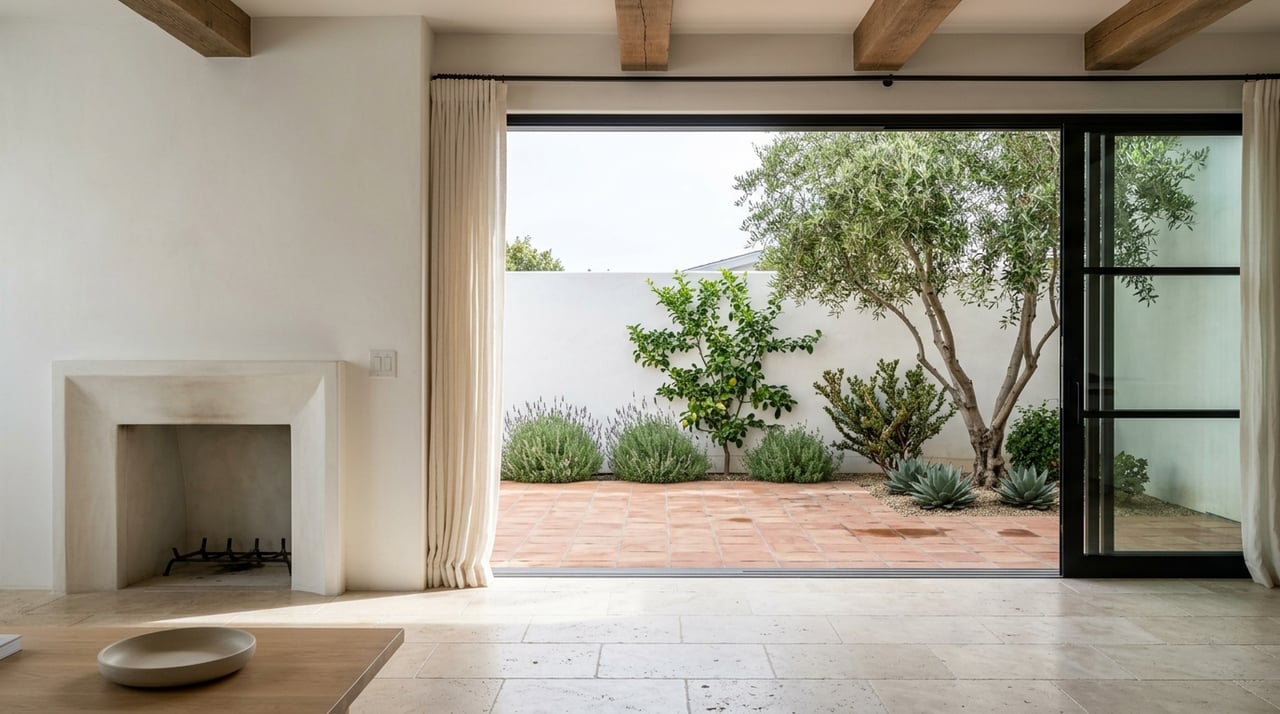
How to Read Today’s Santa Barbara Luxury Market
May 28, 2026
May 28, 2026
If you are trying to make sense of today’s Santa Barbara luxury market, one headline will not help much. The real story is more local, more nuanced, and often more useful when you break it into Santa Barbara, Montecito, and Hope Ranch rather than treating the entire area as one market. If you understand how to read price, pace, and inventory together, you can make better decisions whether you are buying, selling, or simply watching the market. Let’s dive in.
The most important idea to keep in mind is that Santa Barbara luxury is not one uniform market. Public data from spring 2026 shows clear differences between Santa Barbara city, Montecito, and Hope Ranch, even within the same broader South Coast region.
In the April 2026 Santa Barbara MLS statistics for Home Estate/PUD across districts 05–35, 92 homes sold with a median sold price of $2,015,000 and an average sold price of $4,368,518. Average market time was 44 days, and the sold-to-list ratio was 96.37% of list price and 94.60% of original list price. That spread between the median and average matters because it suggests a small number of very high-end sales pushed the average up.
When you narrow the lens, the differences become even clearer. In March 2026, Montecito recorded 30 closed sales with a median sold price of $5.4 million, 59 active listings, and 3.7 months of inventory. Santa Barbara had 103 closed sales, a median sold price of $2.23 million, 66 active listings, and just 1.5 months of inventory, while Hope Ranch had 10 closed sales, a median sold price of $7.04 million, 18 active listings, and 3.6 months of inventory.
Santa Barbara city remains expensive by almost any measure, but it is operating at a different level than Montecito. Realtor.com’s April 2026 summary shows 337 homes for sale, a median listing price of $2,499,500, a median sold price of $2,035,000, 47 days on market, and a 99% sale-to-list ratio.
That tells you two things. First, pricing is still firm for well-positioned homes. Second, buyers appear to have a bit more breathing room than they did a year earlier, since active listings were up 6.80% year over year and median days on market rose 14.63%.
Montecito is a very different market tier. Realtor.com’s April 2026 data shows 83 homes for sale, a median listing price of $6,995,000, a median sold price of $5,090,000, median days on market of 60 days, and a 98% sale-to-list ratio.
Montecito’s listing count was down 9.57% year over year but up 63.46% over three years. That suggests the market has loosened compared with its tightest period, but not to the point of excess supply.
Hope Ranch is smaller, which means a few sales can shift the numbers quickly. Even so, the March 2026 South Coast charts show a median sold price of $7.04 million, 18 active listings, and 3.6 months of inventory.
For buyers and sellers, that means context matters even more here. In a market with fewer transactions, each listing should be judged against a tight set of true comparable properties rather than broad regional averages.
Days on market is one of the easiest numbers to misread. A longer marketing time does not automatically mean something is wrong with a property, especially in luxury markets where buyers often move more deliberately.
Local commentary reported by the Santa Barbara Independent notes that 30 days is often the point at which price reductions become more common in this market. Homes that sell in less than 30 days are more likely to trade at or above asking price, while homes that sit longer may start to open the door to negotiation.
That perspective helps explain current local numbers. Santa Barbara city at 47 days and Montecito at 60 days are not signs of a stalled market. They suggest a market that is active, but no longer moving at the pandemic-era pace.
National luxury data supports that view. Realtor.com’s April 2026 luxury report puts median days on market at 59 days for entry luxury, 68 days for high luxury, and 86 days for ultraluxury. In that context, Montecito’s 60-day median looks fairly normal for a luxury segment.
A home selling close to asking price does not mean every seller is getting exactly what they want. In luxury real estate, even a small percentage difference can represent a meaningful dollar amount.
Montecito’s 98% sale-to-list ratio means homes sold about 2.26% below asking on average in March 2026. Santa Barbara city’s 99% ratio means homes sold about 1.41% below asking. The broader South Coast Home Estate/PUD data for April 2026 came in softer at 96.37% of list price and 94.60% of original list price.
The takeaway is straightforward. Buyers may have some room to negotiate, and sellers benefit from pricing carefully from the start rather than assuming the market will erase an aggressive opening number.
There is also an important exception. In the April 2026 South Coast Home Estate/PUD “List/Sold” subset, the average sale reached 101.04% of list price. That is a reminder that homes with strong presentation, compelling condition, and precise pricing can still outperform the broader market.
Luxury markets can be distorted by trophy sales. If you rely too heavily on average price, you can end up with a misleading read on where the typical property is actually trading.
In the April 2026 South Coast Home Estate/PUD data, the median sold price was $2,015,000 while the average sold price was $4,368,518. The highest sale reached $59,881,000. That kind of top-end closing can pull the average sharply upward without changing what most homes are doing.
For that reason, median price is often the better guide when you want to understand the middle of the market. Average price is still useful, but it should be treated as a signal that needs context, not a complete answer on its own.
Inventory is another number that only makes sense when you look at the right submarket. The phrase “more inventory” can sound dramatic, but it does not tell you much until you know where those listings are and how quickly they are being absorbed.
In the South Coast chart summaries, Montecito moved from 5.2 months of inventory in January 2026 to 4.4 months in February and 3.7 months in March. Santa Barbara stayed much tighter at 1.7, 1.8, and 1.5 months over the same period.
That difference matters. Montecito buyers generally have more choice and more time than buyers in Santa Barbara city, while Santa Barbara city remains comparatively constrained. Hope Ranch, at 3.6 months of inventory in March, sits closer to Montecito than to Santa Barbara city in terms of pace and available selection.
If you are buying in Santa Barbara luxury today, preparation still matters, but patience has more value than it did a few years ago. The market is moving, but it is no longer punishing every pause or forcing every decision into a rush.
A practical way to think about it is this:
This is where a finance-minded approach helps. Instead of asking whether “Santa Barbara luxury” is hot or cold, you are usually better served by asking which micro-market you are in, what inventory looks like there, and how that specific property compares with close alternatives.
If you are selling, the main lesson is not to anchor on the strongest headline sale. A standout estate can set records, but that does not mean buyers will apply the same logic to every property in the same ZIP code.
The current data suggests buyers are still paying for quality, but they are also showing more discipline. In April 2026, South Coast Home Estate/PUD homes sold at 96.37% of list and 94.60% of original list, while Montecito came in at 98% and Santa Barbara city at 99%.
That points to a clear strategy. Price against current absorption, your likely buyer pool, and the home’s direct competition rather than against the most aspirational number you can find.
The first few weeks matter most. Local reporting indicates that once a listing moves past the 30-day mark, price reductions become more common, which means launch strategy, presentation, and pricing discipline are carrying a lot of weight right now.
If you want a practical way to interpret today’s market without getting lost in noise, focus on four numbers together:
When listings rise but pending activity does not keep up, buyers usually gain leverage. When days on market tighten and sale-to-list ratios stay near 98% to 99%, pricing is generally holding firm.
And when median price looks stable but average price jumps, it may be a sign of a few trophy sales rather than broad appreciation across the market. That kind of distinction is especially important in Montecito, Hope Ranch, and other upper-tier pockets where one or two closings can meaningfully influence the monthly story.
Today’s Santa Barbara luxury market is active, selective, and highly local. Santa Barbara city, Montecito, and Hope Ranch are each moving on their own rhythm, with different price tiers, inventory levels, and negotiation dynamics.
If you are buying or selling in this market, the best read is usually the most specific one. Look at the micro-market, compare only true peers, and separate price, pace, and inventory before drawing conclusions. That is often the clearest path to a calmer and more informed decision.
If you want a thoughtful, data-driven read on your next move in Montecito or the broader Santa Barbara market, Marisa Garber offers a calm, strategic approach grounded in local insight and luxury market experience.
Stay up to date on the latest real estate trends.


Marisa Garber delivers a sophisticated real estate experience rooted in local expertise, thoughtful strategy, and personalized service—guiding clients through Montecito’s market with confidence and ease.