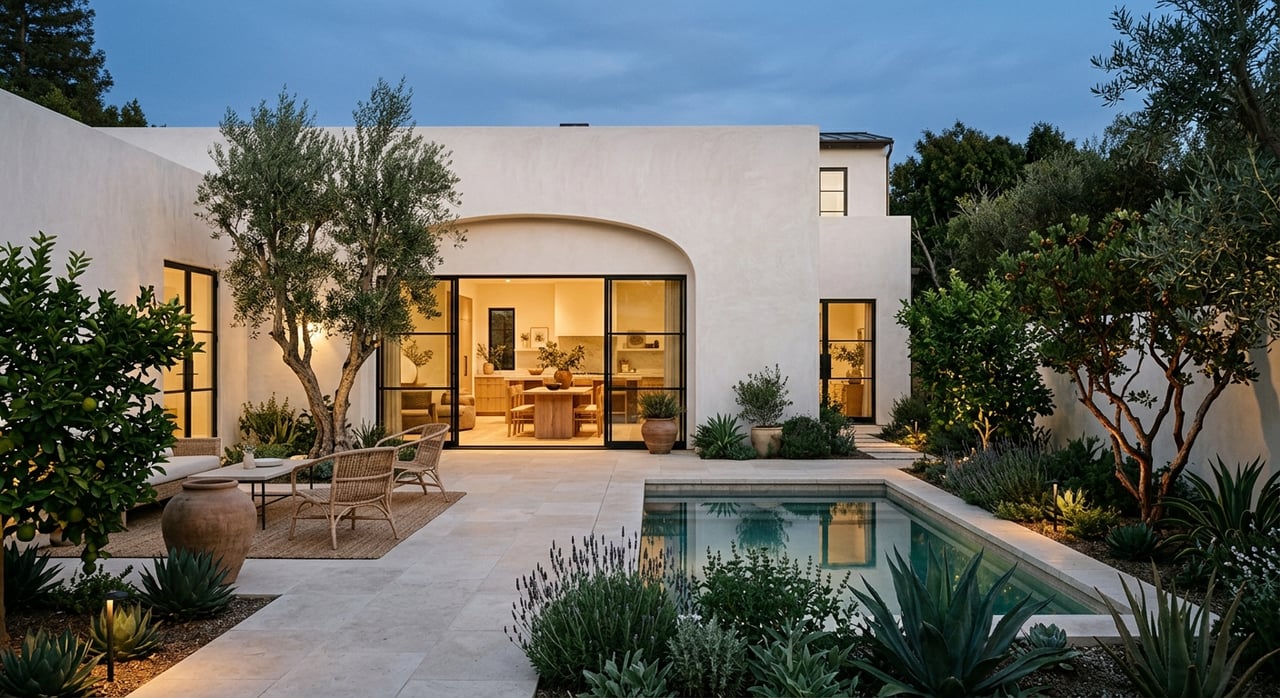
Using An Investment Lens For A Summerland Second Home
April 16, 2026
April 16, 2026
If you are considering a second home in Summerland, it helps to start with the right question: are you buying for cash flow, or are you buying a coastal asset you want to enjoy for years? In this market, that distinction matters. Summerland can offer long-term value and some rental flexibility, but it is better understood as a lifestyle-first purchase with investment discipline rather than a yield-first vacation rental play. With that lens, you can make a smarter decision about what to buy, how to underwrite it, and what risks to plan for. Let’s dive in.
Summerland sits in unincorporated Santa Barbara County between Santa Barbara and Carpinteria, and that setting shapes both its appeal and its rules. Because it falls within the county’s community-plan system, you are not only buying a home, but also buying into a specific local planning and regulatory framework that can affect remodels, rentals, and long-term ownership strategy. You can review the county’s framework for Summerland community planning and the broader community area plan system.
For second-home buyers, that means the usual coastal checklist is not enough. Along with views, layout, and location, you also want to understand parcel-level constraints, carrying costs, and how flexible the property may be if your plans change over time.
Summerland is a small, premium market, and small markets behave differently than larger vacation-home areas. According to the Santa Barbara South Coast MLS summary for 2025 year-to-date, the combined Carpinteria/Summerland segment recorded 79 closed houses/PUDs, a median sales price of $1.89 million, and 3.3 months of inventory. In that same report, Montecito posted 8.3 months of inventory and a median sales price of $6.19 million. These figures come from the Santa Barbara area market report.
What does that mean for you? In practical terms, Summerland can be relatively illiquid. A smaller pool of homes and transactions often supports a longer holding-period mindset, especially if you are buying a distinctive coastal property where resale timing may matter as much as resale price.
A beautiful setting is part of the story, but it should not be the whole story. For a second home, asset quality also includes resilience, maintenance exposure, and the practical realities of coastal ownership.
Santa Barbara County notes that its coastal resiliency planning work is evaluating sea-level rise and related coastal hazards along the county’s coastline. The county’s Energy Assurance Map also identifies wildfire and flooding as ongoing regional concerns, including extreme fire-risk areas across the South Coast and FEMA 100-year flood hazard areas along the coastline.
That does not mean every property carries the same exposure. It does mean you should evaluate each home with a wider investment lens, including:
In a market like Summerland, these details are not secondary. They are part of the ownership thesis.
For a second-home buyer, carrying costs are central to the math. Santa Barbara County states that the homeowners’ exemption applies only when the owner occupies the property as a principal residence. If you are buying a true second home, you should not assume that exemption will be available.
There is also the broader California property tax framework to keep in mind. According to the California Board of Equalization information cited in the research, assessed value is generally limited to a 2 percent annual increase under Proposition 13 unless there is a change in ownership or new construction. For you, that means a purchase typically resets the taxable base.
This is one reason Summerland often makes more sense as a long-term hold. The longer your ownership horizon, the more time you have to absorb transaction costs, annual carrying costs, and any upgrades you make to the property.
One of the biggest mistakes second-home buyers make is underwriting a purchase around rental income before confirming what is actually allowed. In Summerland, rental flexibility may exist, but it is parcel-specific and rule-dependent.
According to county guidance reported in April 2025, it was illegal to advertise or rent in Santa Barbara County’s Inland Area on a short-term basis without first obtaining a short-term rental or homestay permit, while short-term rentals and homestays were then unregulated in the Coastal Zone. The same guidance noted that short-term rentals are permitted in most commercial zones and homestays in residential zones and some other zones, as reported by the Santa Barbara Independent’s coverage of county guidance.
For a Summerland buyer, the takeaway is simple: the street address alone is not enough. You need to verify:
County planning also notes that zoning ordinances are routinely updated to reflect emerging issues and state law. So even if you have heard that a home was rented in the past, that should not replace current verification.
Even when rental use is permitted, gross income is not the number that matters most. You want to understand the compliance burden and the true net result.
The same county guidance reported in 2025 states that operators of short-term rentals and homestays must obtain a transient occupancy registration certificate, collect a 14 percent transient occupancy tax, and remit it monthly. County ballot materials cited in that reporting show the 14 percent rate took effect on January 1, 2025. The guidance also stated that South County properties may owe TBID assessments tied to rental income. You can review those details in the county short-term rental guidance coverage.
For you, this means rental income should be modeled conservatively. Between occupancy assumptions, local taxes, management logistics, maintenance, and wear-and-tear, the gap between top-line revenue and true net income can be meaningful.
If you are buying with plans to improve or expand the home, the parcel’s county oversight matters just as much as its rental profile. Santa Barbara County explains that its Boards of Architectural Review govern exterior changes in the unincorporated county and are intended to help preserve value and land-use compatibility.
For a second-home buyer, that can affect timeline, design options, and project feasibility. If your investment case depends on renovating, adding square footage, or materially changing the exterior, that due diligence should happen early.
If you want to buy in Summerland with an investment lens, it helps to simplify your framework. Instead of asking whether the property is a great vacation rental, ask whether it is a strong long-duration asset that still works if rental use is limited.
A practical framework might look like this:
Would you still want the home if rental income were minimal or unavailable? If the answer is yes, you are starting from a stronger position.
Include property taxes, insurance, utilities, maintenance, and resilience-related upgrades. For a second home, these costs are part of the real investment picture.
If the parcel supports rental use, that can be helpful. But it is best viewed as upside that must be verified, not as the foundation of the purchase decision.
Look carefully at flood, wildfire, access, and backup-power considerations using county resources such as the Energy Assurance Map. A more resilient property may prove to be the better long-term asset even if another home has a more dramatic first impression.
Because Summerland is small and premium, a longer ownership horizon often makes more sense than a short-turn strategy. This is especially true when acquisition costs and future liquidity are part of the equation.
If you expect any level of rental use, federal tax treatment deserves early attention. The IRS explains in Publication 527 how vacation-home rental income and expenses are treated, including the special rule when a dwelling is rented for fewer than 15 days in a year.
The IRS also notes that depreciation must be reduced by the allowed or allowable amount when a rental property is sold. In plain terms, rental days, personal-use days, depreciation, and sale timing can all affect your outcome. That is why the smartest path is usually to coordinate with a qualified tax professional before you close, not after you have already decided how you plan to use the home.
For many high-net-worth buyers, the strongest case for Summerland is not that it behaves like a conventional vacation rental market. It is that it offers a rare combination of coastal lifestyle appeal, limited-market scarcity, and long-term ownership potential, with rental flexibility that may exist but should never be assumed.
That distinction can help you buy more confidently. When you view Summerland as a lifestyle asset first and a rule-constrained income opportunity second, you are more likely to choose the right property, ask better due diligence questions, and avoid building your decision around assumptions that may not hold up.
If you are weighing a second-home purchase in Summerland and want a calm, finance-informed perspective on value, parcel-level considerations, and long-term strategy, Marisa Garber can help you evaluate the opportunity with clarity.
Stay up to date on the latest real estate trends.

Marisa Garber delivers a sophisticated real estate experience rooted in local expertise, thoughtful strategy, and personalized service—guiding clients through Montecito’s market with confidence and ease.