Montecito's Restored Estates Just Became the Test Case for California's New Electrical Disclosure Law
September 17, 2026
September 17, 2026
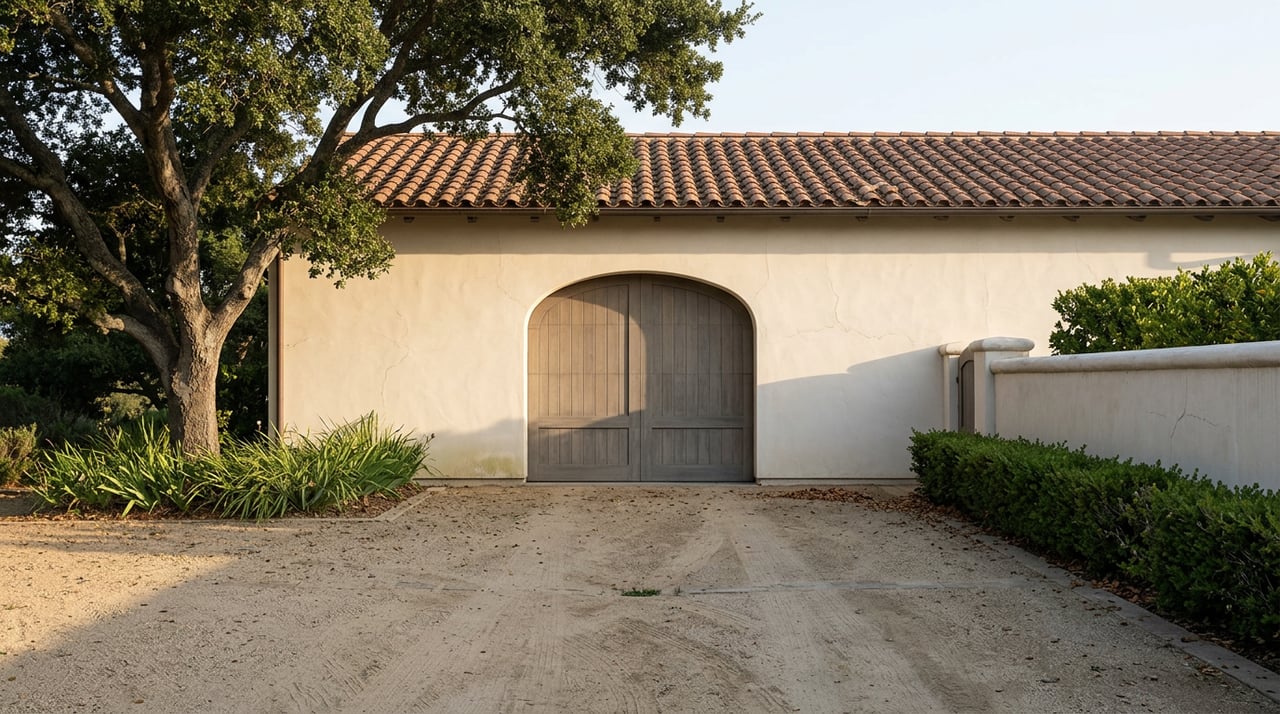
Walk through a 1928 Spanish Colonial Revival in the Upper Village and you will see the restoration everywhere it counts. The plaster has been hand-troweled back to its original texture. The oak floors have been refinished twice since the last owner. The kitchen has been gutted and rebuilt around a La Cornue range. Then you open the garage panel and find a fuse box that has never been touched, because nobody who bought this house in the last forty years thought to ask about it until now.
As of January 1, 2026, they have to ask. California's SB 382 requires the seller of any single-family home to hand the buyer a written disclosure statement covering the main service panel, subpanels, and wiring, and to flag whether any of it has been recalled, is missing a main disconnect breaker, or runs on fuses instead of breakers. It is a short piece of paperwork. In most of California it will land as exactly that. In Montecito it lands on a housing stock where a meaningful share of the most desirable inventory predates the panel it now has to describe.
The statute is narrow by design. It requires a safety inspection of the electrical system and a written notice to the buyer if the inspection turns up any of five specific conditions: a panel or subpanel model subject to a recall, a panel considered unsafe by standard industry practice, a panel that uses fuses instead of circuit breakers, a panel lacking a single main disconnect breaker, or a panel showing significant wear, corrosion, or moisture damage. The law does not require the seller to fix any of it. It requires the seller to say it, in writing, before the sale closes.
That distinction matters more than it sounds. A seller who orders the inspection late and delivers the disclosure after the buyer has already removed contingencies hands that buyer a three to five day right to cancel the contract, as More Services explains, regardless of what stage escrow has reached. A seller who orders it before listing controls the timeline instead of reacting to it.
Most disclosure law explainers treat this as a uniform statewide change. It is not uniform in its effect, because the age and character of the housing stock it touches varies enormously by zip code. Montecito's inventory skews toward exactly the kind of property this law was written to catch. Spanish Colonial Revival is the dominant architectural style across the community, and a real share of that stock dates to the 1920s and 1930s, sitting alongside newer construction rather than replacing it. Neighborhoods like the Hedgerows are defined by that mix, winding lanes where character homes from that era sit blocks from estates built in the last decade.
Renovation in this market tends to run cosmetic before it runs structural. A buyer touring a beautifully finished 1930s estate has no reliable way to know, from the walk-through alone, whether the electrical system behind that finish was ever brought current or simply left in place under new plaster and paint. That is precisely the gap SB 382 is designed to close, and it is a gap that shows up far more often in a market built on restored character homes than in a subdivision where every panel was installed the same year as the house.
None of this is news to the carriers who write policies on Montecito's high-value estates. Homes with a replacement value north of a million dollars in this area typically move through specialized carriers such as Chubb, PURE, and AIG rather than standard homeowners insurers, precisely because luxury construction and older systems carry underwriting questions a standard carrier is not built to evaluate. Those carriers have been asking about panel age and wiring condition informally for years as part of underwriting a high-value policy.
What SB 382 changes is not the question. It changes who has to answer it first, and in writing, before the insurer ever gets involved. A seller who has never had the panel inspected is now creating a documented gap between what the disclosure says and what the insurer will eventually ask during underwriting. Closing that gap before listing, rather than discovering it during the insurance quote a buyer requests mid-escrow, is the difference between a clean transaction and a renegotiation over an issue nobody staged for.
Santa Barbara's South Coast is running at roughly 1.9 months of inventory through the first half of 2026, well under the four to six months that typically defines a balanced market, with sales volume up close to 12 percent compared to the same period last year. Montecito's median settled near $5.75 million over that stretch. Read together, those numbers describe a market moving more transactions through escrow this year than last, at prices where buyers expect a turnkey result and have the leverage to walk if the disclosure timeline slips.
That combination is what makes this fall the first real test of SB 382 in this specific market. More Montecito sellers are listing older estates into a faster-moving pool of buyers than in any recent year, and a meaningful share of those estates carry exactly the kind of original electrical infrastructure the law is built to surface. A seller who treats the inspection as a pre-listing task avoids the friction entirely. A seller who treats it as another form to sign during escrow is choosing to find out what is behind the plaster at the worst possible moment in the transaction.
Order the electrical safety inspection before the property goes on the market, not after an offer arrives. If the panel is original to a 1920s or 1930s build, budget the time to have it evaluated by a licensed electrician who can speak to recall status and code compliance, not just a general home inspector doing a visual pass. If the inspection turns up a fuse box or a panel without a main disconnect, decide in advance whether to disclose and price around it or to address it before listing. Either path is workable. Discovering the answer after a buyer has already removed contingencies is not.
Does this apply if the home was recently rewired? The disclosure requirement itself still applies, but a documented, permitted rewire generally means the inspection will not surface any of the five flagged conditions. Keep the permit and the electrician's final sign-off on hand, since that paperwork is what turns a clean inspection into a clean disclosure.
Does SB 382 require replacing an old panel before selling? No. The law requires disclosure of what the inspection finds, not remediation. Some sellers choose to upgrade an old panel anyway once they see how it affects insurability or buyer confidence, but that is a business decision, not a legal one.
Is this the same disclosure package as the standard Transfer Disclosure Statement? No. SB 382 adds a separate, specific electrical disclosure alongside the existing Transfer Disclosure Statement and Natural Hazard Disclosure that California already requires. It is a new document in the stack, not a replacement for anything already there.
If you are weighing when to list a Montecito estate this fall, or trying to understand what a panel inspection might mean for your price and your timeline, that is exactly the kind of groundwork worth doing before the sign goes in the yard. Marisa Garber works through these questions with sellers and buyers across Montecito every week. Let's Connect.
This article is general information, not legal, tax or financial advice. Consult a qualified professional about your situation.
Stay up to date on the latest real estate trends.




Marisa Garber delivers a sophisticated real estate experience rooted in local expertise, thoughtful strategy, and personalized service—guiding clients through Montecito’s market with confidence and ease.